Sam Perry · 3 November 2026
Erlewald's Soil Microbe Networks Connect Tree Resilience With Regional Crop Performance Trends
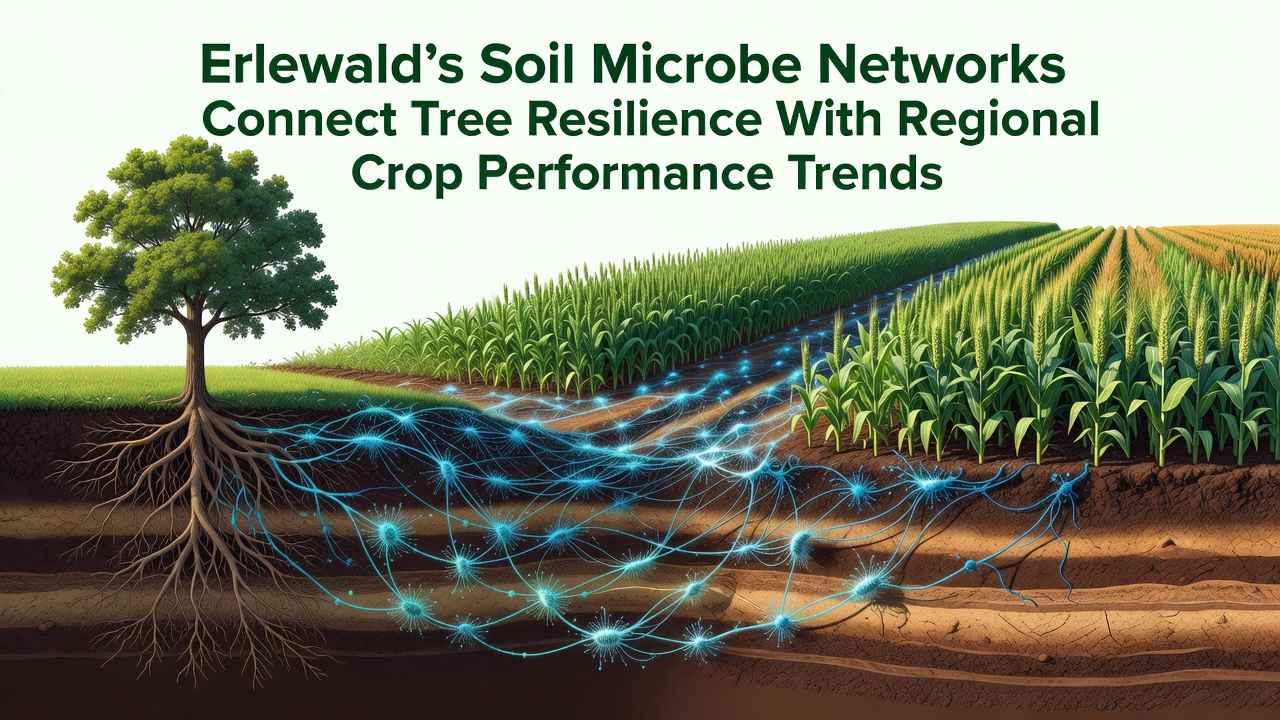
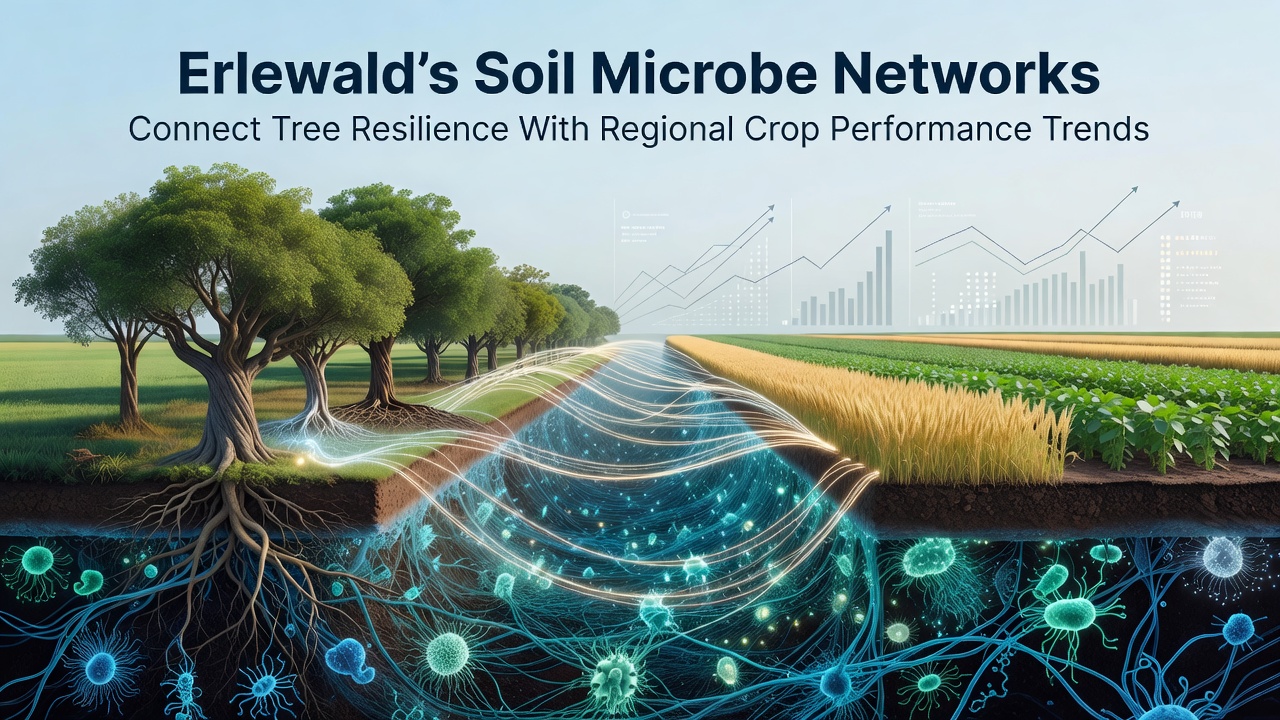
Soil microbe networks in the Erlewald region form extensive underground systems that link tree roots through mycorrhizal fungi and bacterial communities, and these connections have drawn attention from researchers tracking how such networks support tree resilience while influencing nearby agricultural zones.
Data from long-term monitoring sites indicate that fungal hyphae extend between tree species including alder and oak, transferring nutrients such as phosphorus and nitrogen during periods of stress, while bacterial populations modulate soil pH and organic matter decomposition rates.
Structure of Underground Networks
Researchers have mapped these networks using soil core sampling and DNA sequencing, revealing that common mycorrhizal networks span several hectares in undisturbed forest patches, and the same structures reach into adjacent fields where crop roots interact with the fungal strands.
Studies conducted by teams at European research stations show that trees connected through these networks maintain higher survival rates during drought events because resources move from healthier individuals to stressed ones, and this resource sharing extends measurable effects into crop performance metrics like yield stability and root biomass accumulation.
Links to Regional Agriculture
Regional crop performance trends in areas surrounding Erlewald reflect patterns observed in tree stands, with fields bordering intact forest edges recording steadier grain outputs during variable weather years compared to more isolated plots, according to records compiled by agricultural extension services.
Soil analyses from 2024 through 2025 demonstrate elevated microbial diversity indices near forest boundaries, and these indices correlate with reduced fertilizer requirements in adjacent barley and wheat fields, as the microbial communities enhance nutrient cycling efficiency.
Findings Released in November 2026
Updated datasets released in November 2026 by a collaborative project involving institutions across the EU and Australia highlight how microbial network density predicts both tree canopy retention and crop water-use efficiency in the Erlewald catchment, with satellite imagery cross-referenced against ground measurements confirming the spatial overlap.
Figures from the project reveal that plots with higher fungal connectivity experienced 12 to 18 percent less yield variability over five growing seasons, and similar resilience markers appear in tree ring data spanning the same interval.
Observers note that land management practices preserving forest margins allow these networks to persist, whereas fragmentation from infrastructure reduces connectivity and coincides with increased input needs in nearby crops.
Monitoring Methods and Data Sources
Monitoring protocols combine metagenomic sequencing with stable isotope tracing to follow carbon and nutrient flows through the networks, and results published by CSIRO soil health programs provide comparative benchmarks from analogous systems in temperate zones.
Additional validation comes from long-term ecological research sites operated under EU frameworks, where standardized sampling grids track changes in microbial biomass and enzyme activity across seasons.
Conclusion
Evidence assembled to date positions Erlewald's soil microbe networks as functional bridges between forest resilience and agricultural output trends, and continued monitoring through 2026 and beyond supplies the quantitative basis for understanding these connections at landscape scale.