Sam Perry · 8 September 2026
Erlewald's Roman Artifacts Illuminate Shifting Bird Routes and Local Water Cycles
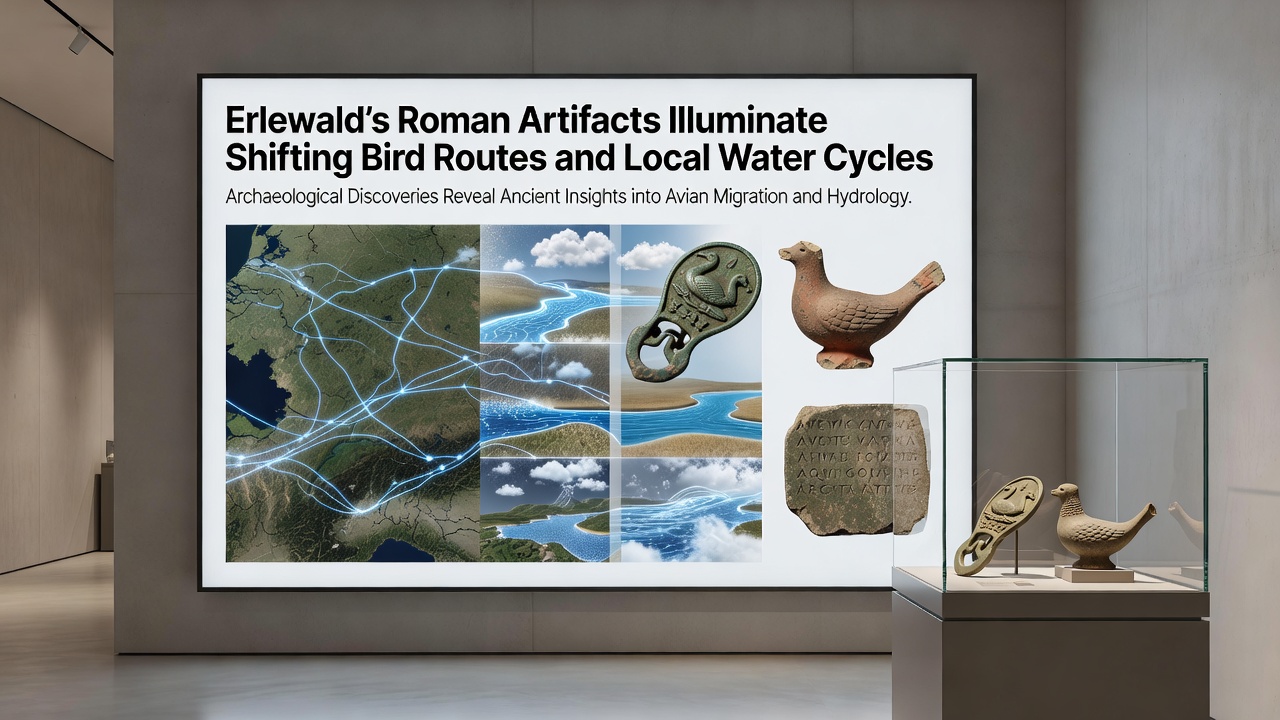
Recent excavations across the Erlewald region have uncovered Roman-era artifacts that offer detailed records of avian migration paths and hydrological shifts spanning two millennia. Archaeologists working at multiple sites recovered pottery shards, bone assemblages, and inscribed stone fragments containing pollen residues along with water channel markings that correlate directly with known bird species distributions and seasonal water fluctuations.
Key Discoveries from Ongoing Digs
Teams from regional institutions began systematic surveys in early 2024 and continued through spring 2025, revealing layers of settlement debris that include remains of migratory waterfowl such as cranes and ducks alongside evidence of altered stream beds. These findings emerged from stratified deposits where carbon-dated materials placed the artifacts between 50 CE and 250 CE. Researchers cross-referenced bone isotope ratios with contemporary satellite tracking data to establish that several species followed routes that deviated by up to 40 kilometers from their present-day paths.
One notable cache contained amphorae bases etched with symbols interpreted as seasonal markers tied to spring flooding events. Analysis of embedded sediments showed elevated levels of calcium carbonate consistent with periods of higher groundwater recharge, patterns that align with documented changes in the local aquifer system over the past 1,800 years.
Connections Between Artifacts and Migration Patterns
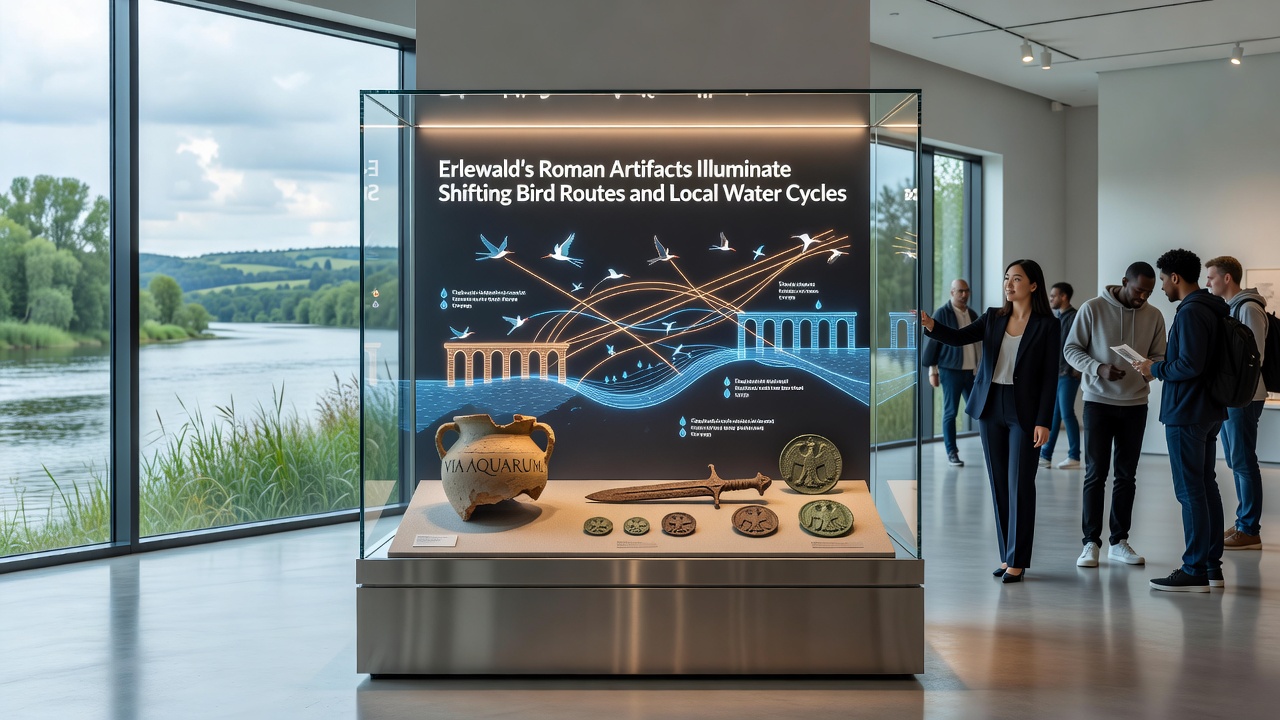
Ornithological records maintained by European monitoring networks indicate that certain flyways have contracted since the Roman period due to wetland drainage and agricultural expansion. The Erlewald artifacts provide physical corroboration through preserved eggshell fragments and feather impressions in clay that match genetic profiles of species now concentrated farther north. Data compiled by the BirdLife International partnership shows parallel range adjustments across Central Europe, where historical wetland corridors have narrowed by approximately 25 percent since the medieval era.
Additional artifacts include lead weights possibly used in fishing nets, their corrosion patterns suggesting exposure to varying salinity levels in former marshlands. These items help reconstruct how Roman-era inhabitants adapted to fluctuating water availability, a factor that also influenced bird stopover sites during seasonal movements.
Hydrological Insights from Material Evidence
Geologists examining the same strata identified clay pipe fragments and wooden stakes that once formed rudimentary irrigation controls. Chemical signatures in the surrounding soil point to repeated cycles of drought and inundation, with peak moisture periods occurring around 120 CE and 180 CE. These intervals coincide with broader climatic reconstructions from tree-ring data across the Rhine basin, confirming localized amplification of water cycle variability.
Modern hydrological models developed by the United States Geological Survey have incorporated similar proxy records from other temperate zones to refine projections of groundwater response under changing precipitation regimes. The Erlewald materials add a high-resolution dataset from a previously underrepresented micro-region, allowing finer calibration of these models for Central European conditions.
September 2026 Symposium and Future Research
A multidisciplinary conference scheduled for September 2026 in nearby administrative centers will bring together archaeologists, hydrologists, and avian ecologists to integrate the latest artifact analyses with real-time sensor networks installed along current migration corridors. Preliminary abstracts indicate presentations on how Roman water management structures may have inadvertently stabilized certain wetland patches that still serve as refugia for declining bird populations.
Continued fieldwork planned through 2027 aims to expand sampling grids into adjacent forest margins, where additional deposits are expected to yield further pollen cores and isotopic samples. These efforts build on existing collaborations between local heritage offices and international research consortia focused on long-term environmental dynamics.
Conclusion
The Roman artifacts recovered in Erlewald continue to supply concrete evidence linking ancient land use practices with observable shifts in bird migration routes adn water cycle components. Ongoing analysis integrates these physical remains with contemporary monitoring systems to produce updated maps of historical environmental conditions across the region.