Olivia Perry · 31 August 2026
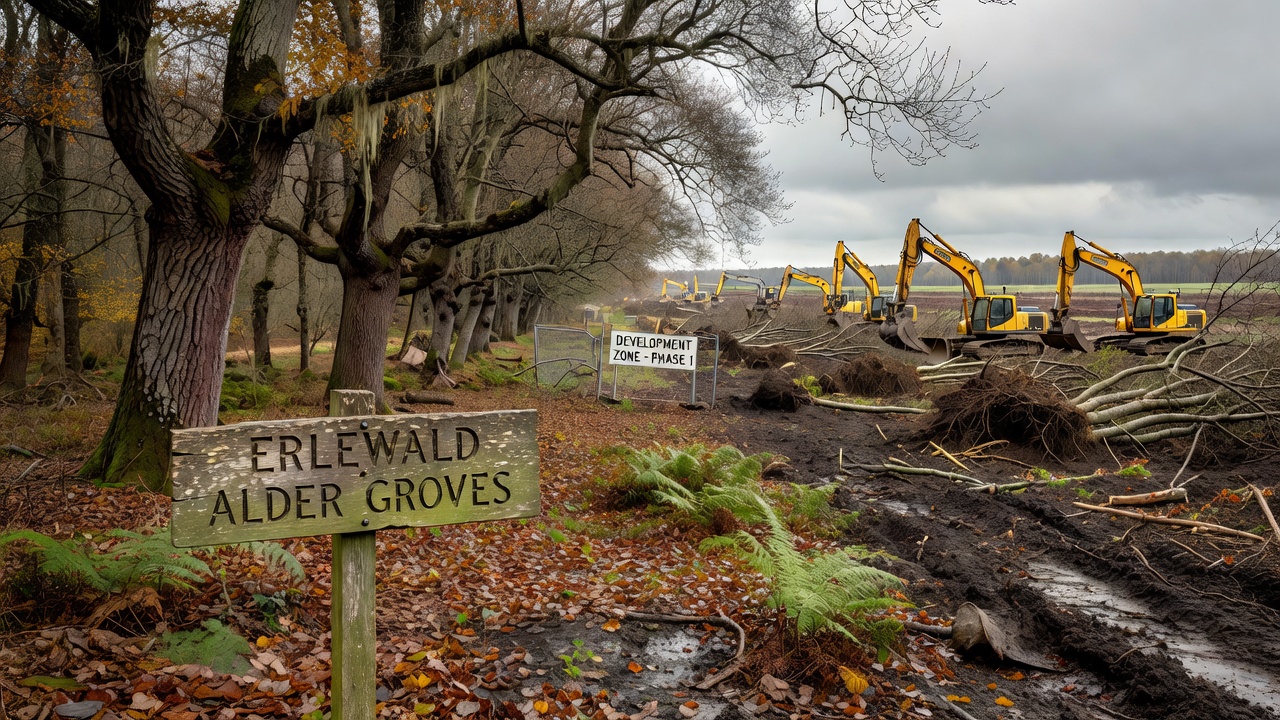
Erlewald Forest's alder groves face pressure from multiple development applications submitted to regional planning authorities. The proposals involve residential housing and light commercial facilities on land bordering the groves, raising concerns about habitat loss and water quality impacts in this sensitive wetland area.
Ecological Role of Alder Groves
Alder groves in Erlewald support diverse wildlife including wetland birds, pollinating insects, and rare amphibians. These stands stabilize soils, filter runoff, and contribute to local flood control through their root systems. Long-term monitoring shows they store significant carbon and maintain cooler microclimates compared with surrounding mixed woodland. Residents have used the groves for quiet recreation and educational outings for generations, viewing them as a core part of the community's natural identity. Recent surveys confirm continued presence of protected species that depend on the moist, shaded conditions unique to these locations.
Forest ecologists emphasize that fragmentation from new roads or buildings could isolate populations and increase edge effects such as invasive plant spread. Past conservation zoning has protected portions of the forest, yet current applications test those boundaries directly.
Proposed Projects and Local Reactions
Two main applications seek approval for approximately 120 housing units and a small retail plaza. Developers cite regional housing shortages and potential employment gains as justification. Environmental organizations have submitted objections, requesting full environmental impact assessments before any permits are granted. Community meetings scheduled for the coming weeks will allow public input on alternatives, including relocation of building sites to already cleared farmland farther from the groves.
Local officials note the need to balance growth with preservation, pointing to successful buffer-zone projects elsewhere in Erlewald. Mitigation options under discussion include widened riparian corridors, strict limits on impervious surfaces, and ongoing water-quality testing. Tourism operators worry that visible construction could reduce visitor numbers drawn by the forest's intact character. Scientists continue baseline studies to document current conditions before any work begins. The planning process remains open, with final decisions expected after review of all submitted evidence and resident feedback.