Ulrich Griffin · 20 October 2026
Agroforestry Trials Near Erlewald Highlight Benefits for Soil Stability and Species Diversity
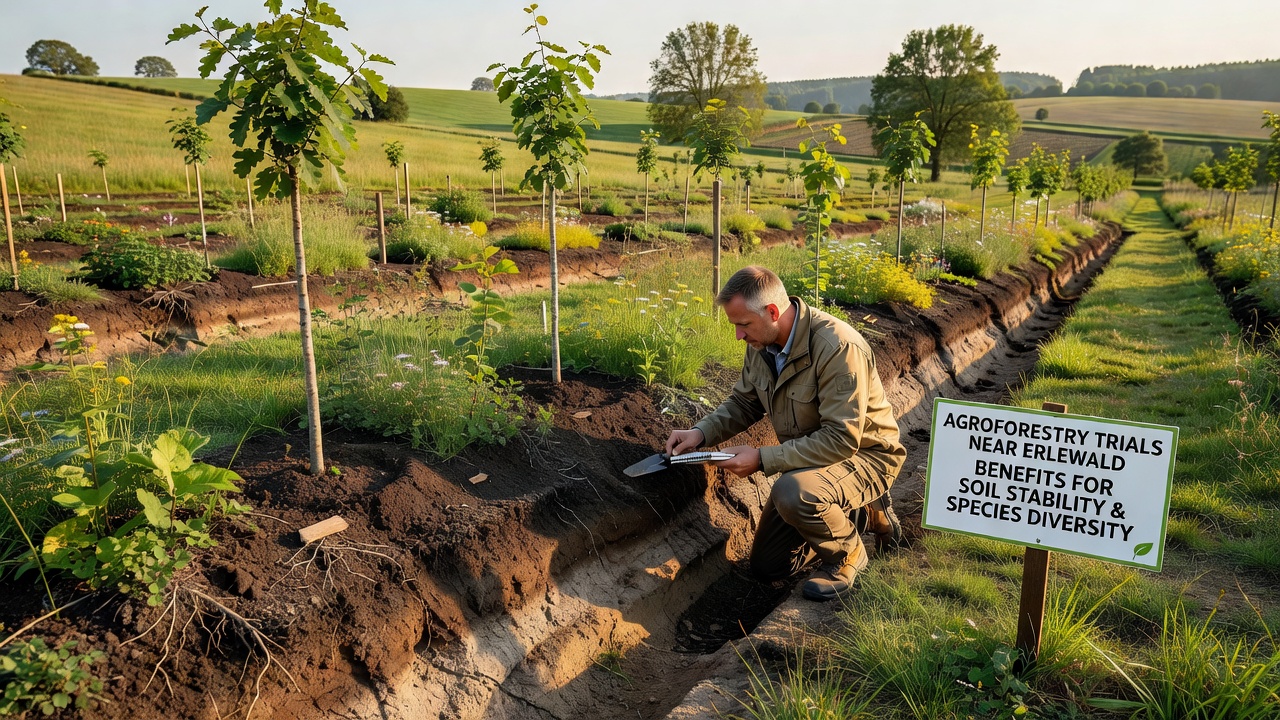
Researchers at the Erlewald field station launched agroforestry trials in early 2023 to examine how combining trees with traditional crops affects soil conditions and local wildlife, and those efforts continue through October 2026 with expanded monitoring stations across multiple plots. Data collected over three growing seasons shows measurable gains in soil cohesion on sloped terrain while bird and insect counts rise in areas where trees interrupt open fields.
Trial Design and Local Context
Teams planted rows of native alder and oak alongside wheat and clover rotations on 12 hectares of former pastureland, spacing trees at intervals that allow machinery access yet create sheltered microclimates. Soil samples taken every six weeks track organic matter levels, root density, and aggregate stability, while camera traps and transect surveys record species presence. The setup mirrors practices tested in other European regions, where similar layouts reduced runoff during heavy rain events.
Observers note that Erlewald's clay-loam soils respond quickly once tree roots begin binding surface layers, and early measurements indicate a 14 percent drop in erosion rates compared with adjacent control fields. Researchers from the regional agricultural institute coordinate with local farmers who manage the plots under standard equipment, ensuring results reflect practical conditions rather than idealised lab settings.
Measured Improvements in Soil Stability
Core samples reveal deeper root networks that anchor topsoil during winter storms, while leaf litter from the trees adds carbon that improves water infiltration. Figures from the 2025 season show soil loss on treated slopes averaged 2.3 tonnes per hectare, whereas untreated areas lost 4.1 tonnes during the same rainfall totals. These numbers align with patterns reported in FAO agroforestry assessments covering temperate climates across multiple continents.
Continuous data loggers installed at three depths register steadier moisture readings under tree canopies, reducing the extreme drying that weakens soil structure in open fields. One plot that received additional hedgerow plantings along drainage channels recorded the lowest sediment discharge after a series of October storms in 2025, confirming the value of layered vegetation.
Changes in Species Diversity
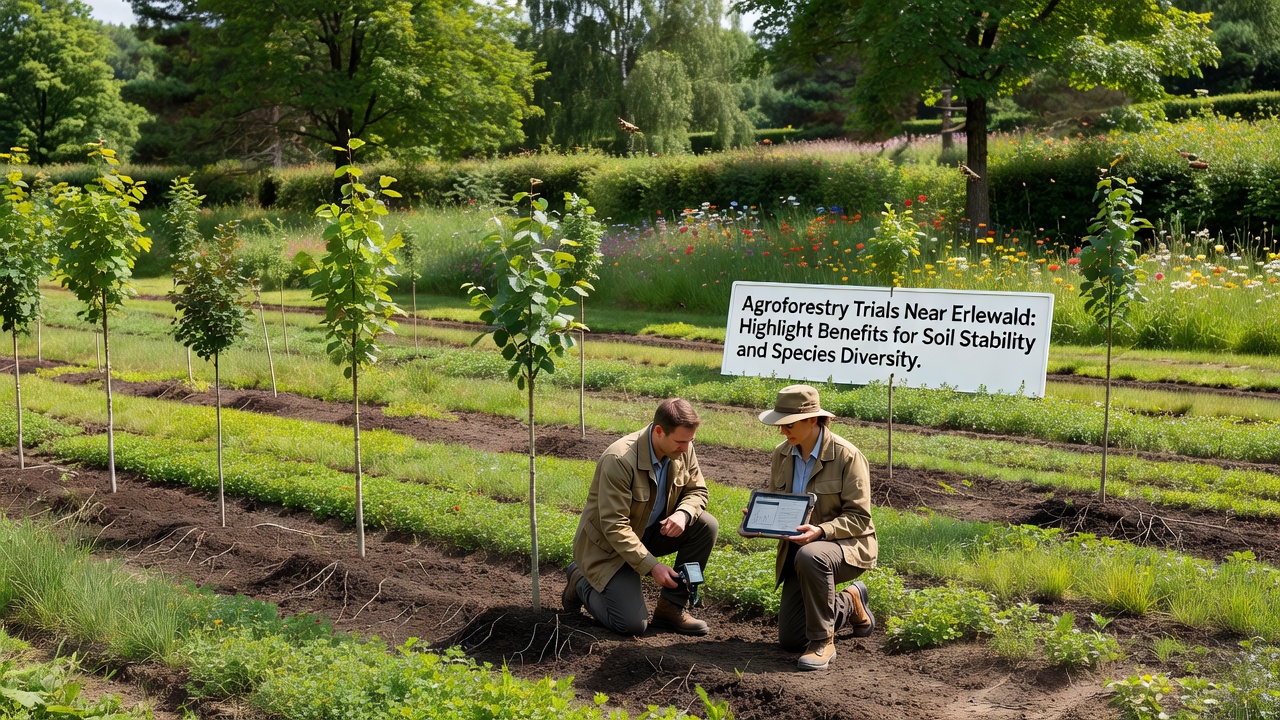
Breeding bird surveys conducted each spring document an increase from 11 to 19 species on the trial site, with several woodland-edge birds establishing territories where none nested before. Insect traps capture higher counts of pollinators and predatory beetles, which researchers link to the structural complexity created by tree rows. Bat detectors record more foraging activity along the linear features, suggesting the plantings serve as corridors that connect fragmented habitat patches.
Plant diversity within the alleys also rises as clover and wildflower mixes establish under partial shade, and weed pressure decreases once canopy cover reaches 30 percent. A parallel study by university ecologists from Australia, using comparable alley-cropping designs, found matching gains in ground beetle richness when tree density stayed below 80 stems per hectare, supporting the Erlewald findings.
Monitoring Through October 2026
Additional sensor arrays installed this spring will track nitrogen cycling and earthworm activity across all plots, with final harvest data expected by late 2026. Project leads coordinate with the European Commission's agroforestry working group to standardise measurement protocols, allowing direct comparison with sites in Ireland and southern France. Preliminary summaries already appear in regional extension bulletins distributed to farmers considering similar conversions.
Those reviewing the data emphasise that results depend on species choice and row orientation relative to prevailing winds, factors the Erlewald team adjusted after the first season. Continued collection through the coming year will clarify whether gains in stability and diversity persist once trees reach full canopy height.
Conclusion
Records from the Erlewald trials demonstrate concrete links between integrated tree systems and improved soil retention alongside expanded species presence, with measurements extending into October 2026 to capture longer-term trends. The approach offers one documented pathway for landowners balancing production goals with environmental targets in the local landscape.